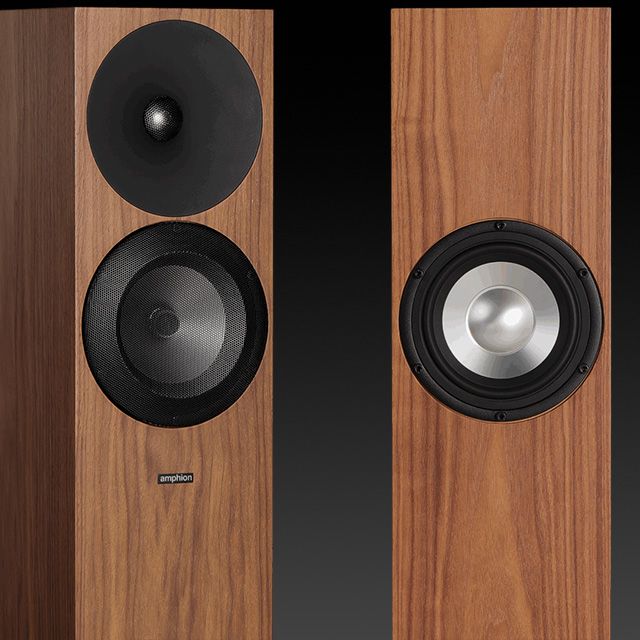
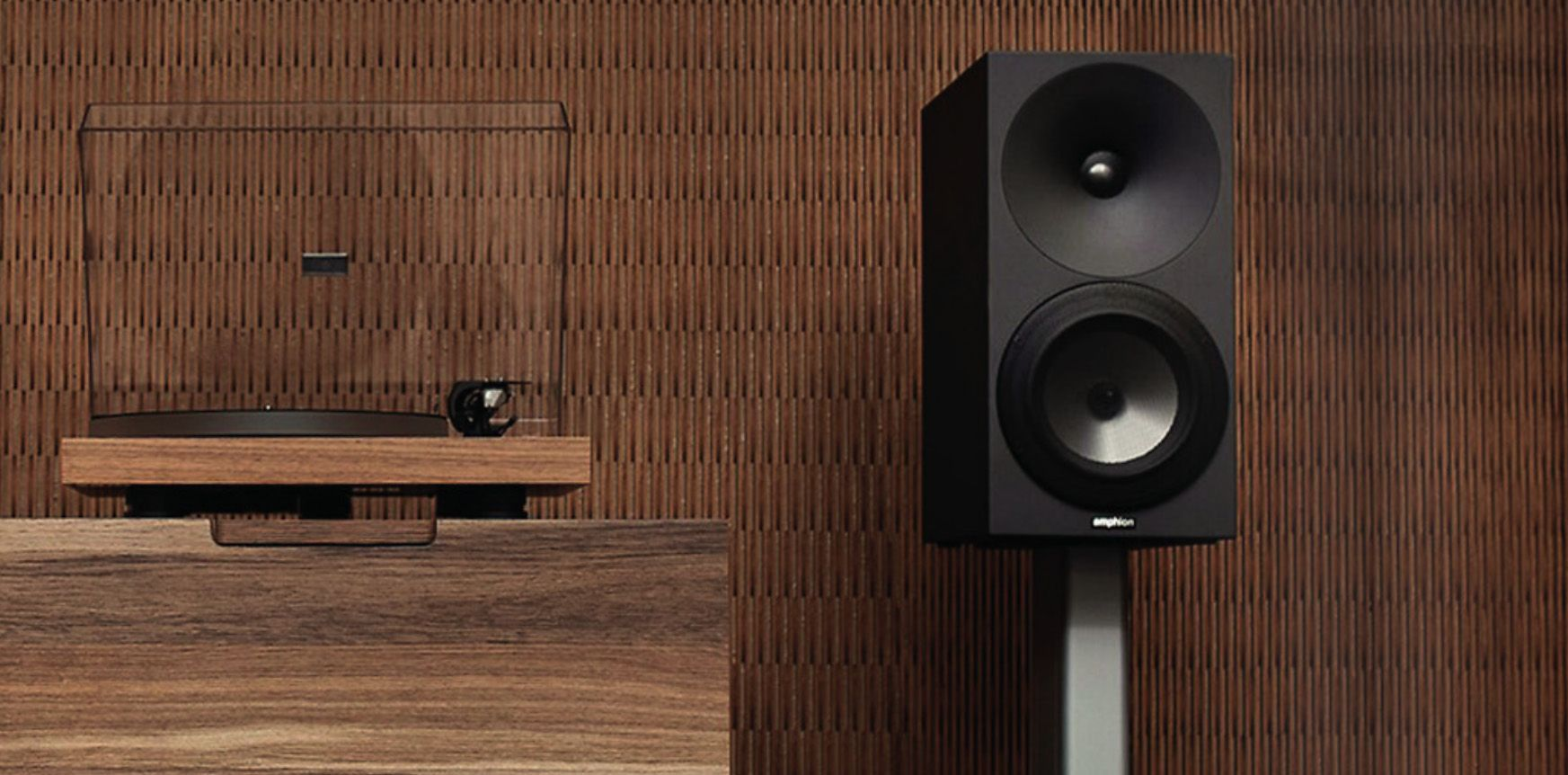
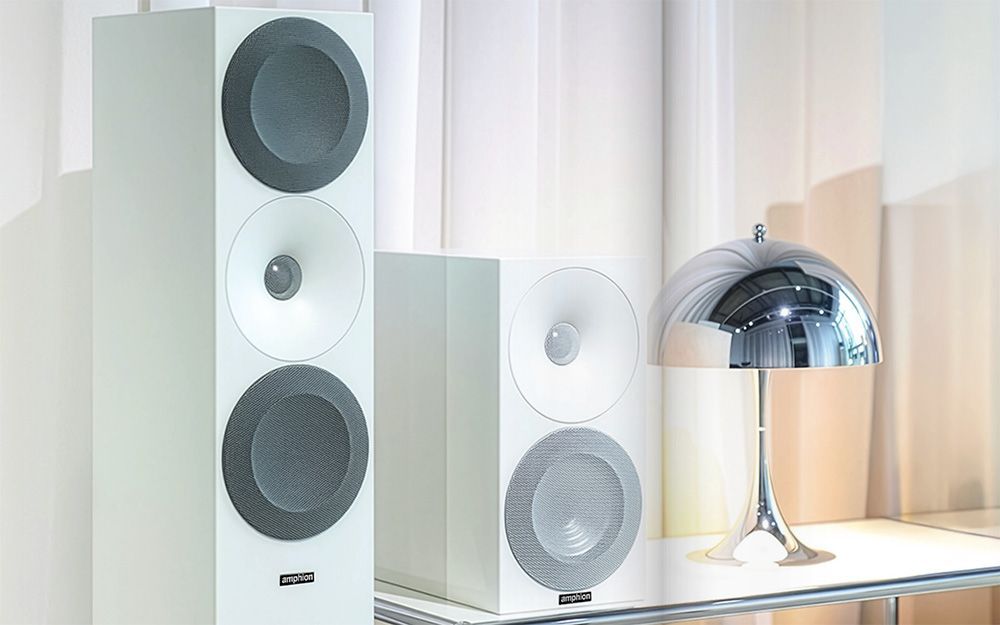
Amphion have recently launched their new Argon X-Series of loudspeakers. These models consist of the 3X stand-mount speaker and two floor-stander models, the 3LX and 7LX. The new series now have the tweeter from the flagship Krypton model. This unit allows reproduction up to 55 kHz. This is of course up to well beyond human hearing meaning audible frequencies are well within its operating window. These higher frequencies can also harmonise with lower frequencies and become audible, increasing detail retrieval.
The crossover has also had a major revision to integrate the new tweeter within the X range, maximising its impact on sound quality.
In our listening tests we found these to have all of the original traits that made us fall in love with the Argon range in the first place but now have a much more refined sound. The Argon range have always had a fantastically wide sweet-spot due to the waveguide on the tweeter (see below for more detailed information on this arrangement). The sound also has fantastic depth to the soundstage. We believe this is where the magic happens, with a truly 3D sound-field. The new tweeter has brought an airier presentation, brisling with information. The new tweeter is not forward in any way but delivers more micro-detail, and thus more emotion to the music. Sounds are more accurately portrayed in space and the layering of sound becomes more apparent. These are fantastic speakers.
Amphion loudspeakers have been making music since 1998 in Finland and this is still where the speakers are designed and manufactured today. The key to the sound of Amphion is their controlled dispersion technology, which enables their speakers to achieve a very musical sound which is more repeatable in a variety of rooms. They have had success with this technology in the studio-based, professional arena and a have separate range of professional loudspeaker designs.
The tweeter
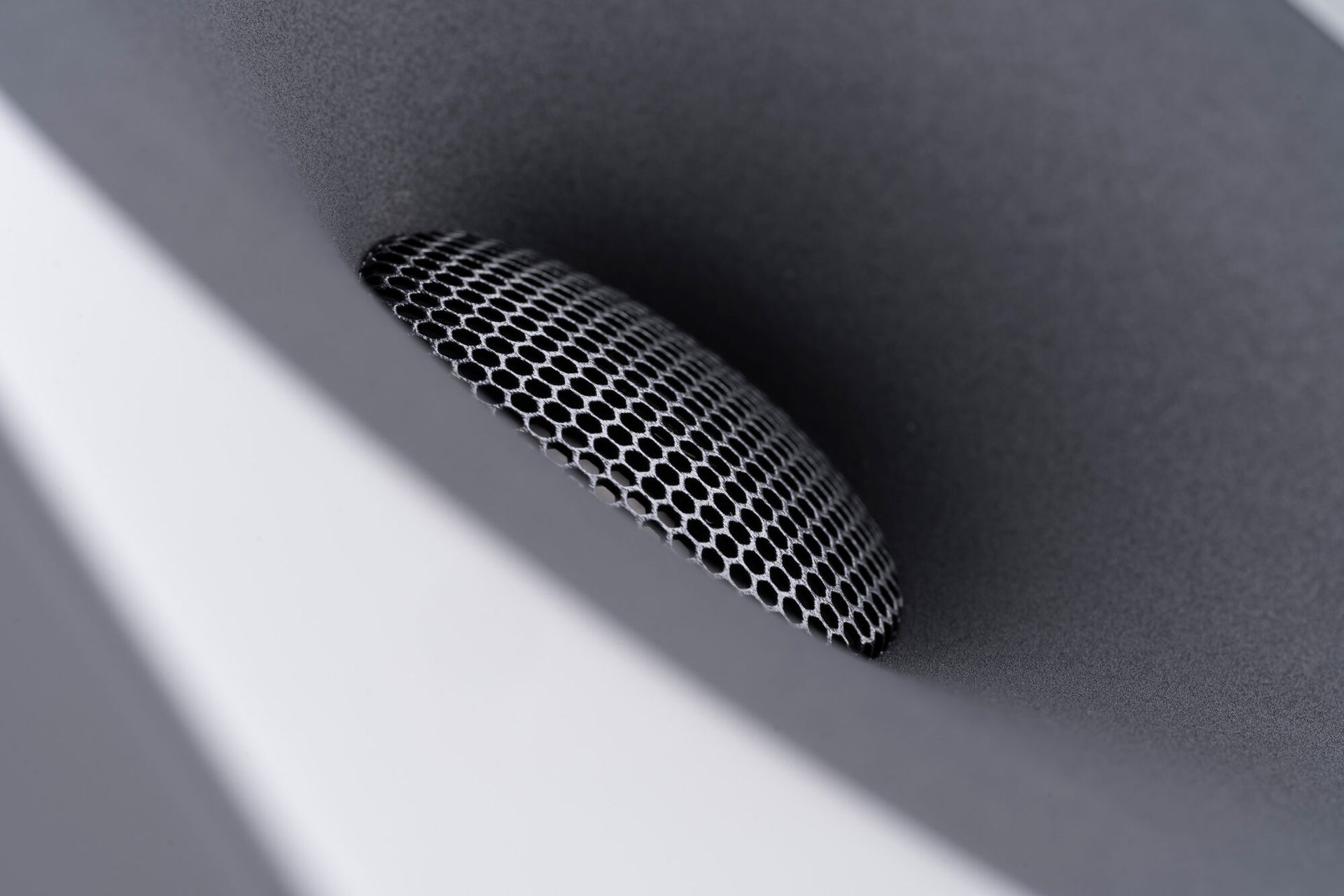
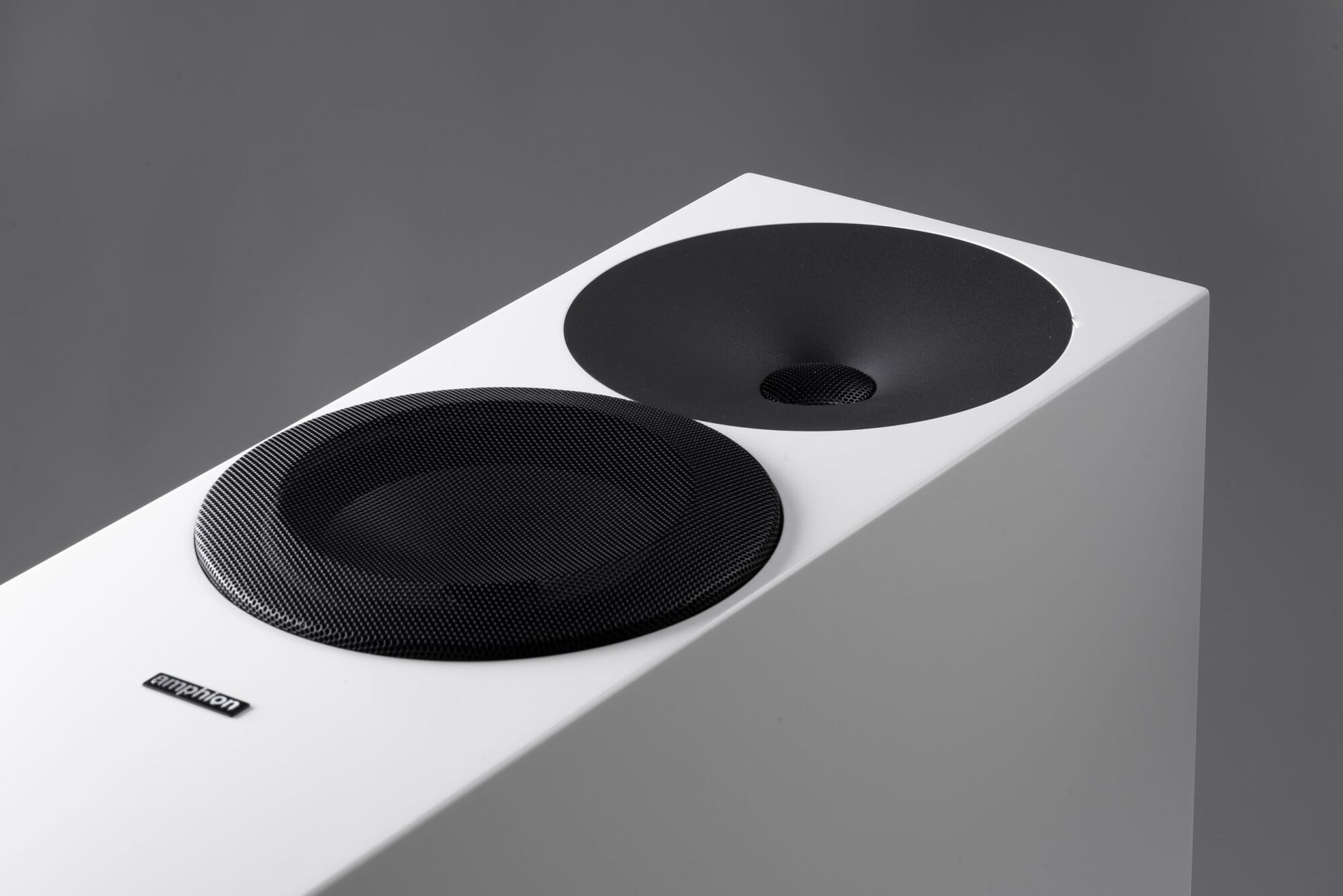
The tweeter, and its waveguide, is an obvious differentiator from the pack. This ensures consistent, wide dispersion and, as the tweeter is semi-horn-loaded (via the wave-guide surround), the diaphragm does not need to move as much to deliver the same volume levels as with more usual designs. There is less likelihood of distortions in the high frequencies and, perhaps importantly, less of a sweet spot for the listener. Indeed, even the tiny grills over the tweeters themselves have treatment to aid in their characteristic dispersion traits. The other key advantage of this arrangement is the crossover frequency can be lower and helps make the marriage with the woofer seamless.
Amphion Argon
Amphion Argon
Amphion Argon
For the low frequencies, the Argon range utilises customised units from the world-renowned company, SEAS. The cabinets of the Argon range start with bass-reflex enclosures and then move to more unusual passive-radiator designs for the Argon X-Series. In these more complicated designs, a passive (non-driven) speaker cone is used to cover the frequency range where the port would effectively be on a bass-reflex cabinet. It is then driven by the air-pressure changes within the sealed cabinet, from the front facing active driver. This unit is designed to work in conjunction with the active (driven) bass unit located on the front and is tuned to a lower frequency, giving greater extension.
The additional advantages of using a passive-radiator design are significant and, again, a real differentiator from more conventional bass-reflex designs. The problems with bass port ‘chuffing’ are eliminated and makes room placement far easier. Bass is delivered in a much tighter and more controlled fashion. These passive radiator systems are not usually employed as they are costlier to design and manufacture.